
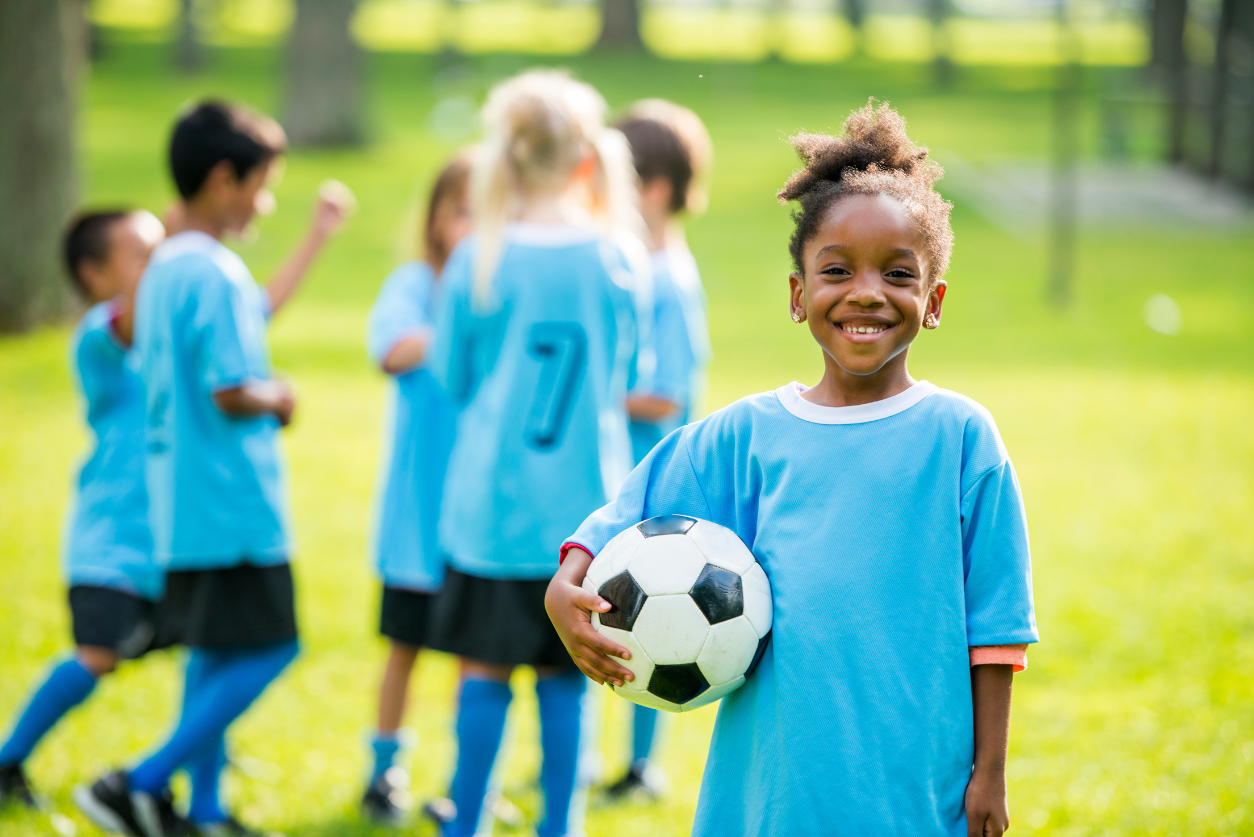
Have you ever wondered what makes a great athlete truly great? Is it just their physical talent? Or is there something more? The answer is a big YES! The secret weapon that many top athletes have is a super strong belief in themselves. This is called self-confidence, and it’s a huge part of what we call sports psychology.
Sports psychology is all about understanding how your mind affects your performance in sports. It’s like having a coach for your brain. Just like you train your body to be stronger and faster, you can also train your mind to be more focused, positive, and confident. And when you do that, you can unlock your full potential and become the best athlete you can be.
Think about your favorite sports hero. Do they look scared and unsure of themselves when they compete? Probably not. They look focused, determined, and ready to take on any challenge. That’s because they have a high level of self-confidence. They believe in their skills and their ability to succeed. And that belief helps them to perform at their best, even under pressure.
But what if you’re not feeling so confident? What if you get nervous before a big game? What if you make a mistake and then can’t stop thinking about it?
That’s where sports psychology comes in. It gives you the tools and strategies you need to build your confidence and overcome those negative thoughts and feelings.
In this blog post, we’re going to take a deep dive into the world of sports psychology and explore how you can build unshakeable confidence. We’ll look at what the science says about confidence and performance. We’ll also share some practical tips and exercises that you can start using today to boost your self-belief. So, get ready to train your brain and become a more confident and successful athlete!
The Science of Confidence: Why It Matters
So, we know that confidence is important. But what does the science say about it? Well, a lot of research has been done on the link between confidence and sports performance. And the results are clear: confidence has a huge impact on how well you play.
One big study looked at over 3,700 athletes from all different sports and countries. The researchers found that there was a strong connection between how confident the athletes were and how well they performed. In other words, the more confident athletes were, the better they did in their sport.
But why is that? What is it about confidence that makes such a big difference? Here are a few reasons:
• Confidence helps you focus.
When you’re feeling confident, you’re able to tune out distractions and focus on what you need to do. You’re not worried about what other people are thinking or what might go wrong. You’re just in the zone, focused on the task at hand.
• Confidence helps you set higher goals.
If you believe in yourself, you’re more likely to set challenging goals. And when you set high goals, you’re more likely to work hard to achieve them. This can lead to big improvements in your performance over time.
• Confidence helps you bounce back from mistakes.
Everyone makes mistakes. It’s a part of sports and a part of life. But when you’re confident, you don’t let those mistakes get you down. You see them as learning opportunities and you’re able to move on quickly. You don’t dwell on the negative. Instead, you focus on what you can do better next time.
• Confidence helps you stay motivated.
When you believe in your ability to succeed, you’re more likely to stay motivated, even when things get tough. You’re willing to put in the extra work and effort because you know it will pay off in the end.
So, as you can see, confidence is not just a feeling. It’s a powerful mental tool that can have a real and measurable impact on your athletic performance. And the good news is that confidence is not something you’re born with. It’s a skill that you can learn and develop over time. In the next section, we’ll look at some practical ways you can start building your confidence today.
Building Your Confidence: Practical Strategies
Now that we know why confidence is so important, let’s talk about how you can build it. Here are some proven strategies from the world of sports psychology that you can use to boost your self-belief.
1. Master Your Self-Talk
Have you ever noticed that little voice inside your head? The one that’s always commenting on what you’re doing? That’s your self-talk. And it can have a huge impact on your confidence.
If your self-talk is negative and critical, it can tear your confidence down. But if it’s positive and encouraging, it can build your confidence up. The key is to become aware of your self-talk and then learn to control it.
Here’s how you can do it:
• Listen to your inner voice.
Pay attention to what you’re saying to yourself, especially when you’re feeling down or frustrated. Are your thoughts helpful or hurtful? Are they realistic or are you being too hard on yourself?
• Challenge your negative thoughts.
When you catch yourself thinking something negative, challenge it. Ask yourself, “Is that really true?” or “What’s a more positive way to look at this?” For example, if you think, “I’m a terrible player,” challenge that thought. Remind yourself of all the times you’ve played well. Or, you could reframe the thought to something more constructive, like, “I made a mistake, but I know what to do differently next time.”
• Practice positive self-talk.
Make a conscious effort to talk to yourself in a positive and encouraging way. You can even come up with a few positive phrases or mantras that you can repeat to yourself during practices and games. For example, you could say something like, “I am strong and capable,” or “I’ve got this!”
One of the most famous athletes who used self-talk to his advantage was Michael Phelps, the most decorated Olympian of all time. Before his races, he would repeat phrases like “I’m here to win” to himself. This simple technique helped him to stay focused and confident, and we all know how that turned out!
2. Visualize Success
Another powerful tool for building confidence is visualization. This is where you create a mental movie of yourself performing at your best. You see yourself making the perfect shot, running your fastest race, or scoring the winning goal.
Visualization works because your brain can’t always tell the difference between what’s real and what’s imagined. So, when you visualize yourself succeeding, you’re actually training your brain for success. You’re creating a mental blueprint for how you want to perform.
Here’s how to practice visualization:
- Find a quiet place.
Sit or lie down in a comfortable position and close your eyes.
2. Imagine the scene.
Picture yourself in the place where you compete. See the field, the court, or the track. Hear the sounds of the crowd. Feel the ball in your hands or the ground beneath your feet.
3. See yourself succeeding.
Now, imagine yourself performing exactly the way you want to. See every detail of your successful performance. If you’re a basketball player, see the ball leaving your hands and swishing through the net. If you’re a runner, see yourself crossing the finish line in first place.
4. Feel the emotions.
As you visualize your success, try to feel the emotions that go along with it. Feel the joy, the excitement, and the pride of performing at your best.
5. Practice regularly.
The more you practice visualization, the more powerful it will become. Try to do it for a few minutes every day, especially before practices and games.
Visualization is a technique used by many of the world’s top athletes. They know that if they can see it in their minds, they’re more likely to achieve it in reality.
3. Set Smart Goals
Goal setting is another great way to build confidence. When you set and achieve goals, you prove to yourself that you’re capable of success. This creates a positive cycle of achievement and confidence.
But not all goals are created equal. To be effective, your goals should be SMART:
• Specific: Your goals should be clear and specific. Instead of saying, “I want to get better at basketball,” say, “I want to improve my free throw percentage by 10%.”
• Measurable: You should be able to track your progress towards your goals. This will help you to stay motivated and see how far you’ve come.
• Achievable: Your goals should be challenging, but also realistic. If you set goals that are impossible to achieve, you’ll only get discouraged.
• Relevant: Your goals should be important to you and relevant to your sport.
• Time-bound: Your goals should have a deadline. This will create a sense of urgency and help you to stay on track.
It’s also a good idea to set a mix of different types of goals:
• Process goals: These are goals that focus on the things you need to do to improve. For example, “I will practice my free throws for 30 minutes every day.”
• Performance goals: These are goals that focus on your own personal performance. For example, “I will get 8 out of 10 free throws in the next game.”
• Outcome goals: These are goals that focus on the result of a competition. For example, “We will win the championship.”
While it’s okay to have outcome goals, it’s important to focus most of your energy on your process and performance goals. That’s because you have more control over these types of goals. You can’t always control whether you win or lose, but you can control how much you practice and how well you play.
By setting and achieving SMART goals, you’ll build a strong sense of self-efficacy, which is the belief in your own ability to succeed. And that’s a key ingredient for unshakeable confidence.
4. Prepare, Prepare, Prepare
There’s no substitute for hard work and preparation. The more prepared you are, the more confident you’ll feel. When you know that you’ve put in the time and effort to be ready for a competition, you’ll have a deep sense of belief in your abilities.
Here are some ways to make sure you’re fully prepared:
• Practice with a purpose.
Don’t just go through the motions in practice. Have a clear idea of what you want to work on and what you want to achieve in each practice session.
• Simulate game conditions.
Try to make your practices as much like a real game as possible. This will help you to get used to the pressure and intensity of competition.
• Develop a pre-game routine.
A pre-game routine can help you to get into the right mindset for a competition. Your routine could include things like listening to music, stretching, or visualizing your success. The key is to find a routine that works for you and then stick with it.
• Take care of your body.
Make sure you’re getting enough sleep, eating healthy foods, and staying hydrated. When your body feels good, your mind will feel good too.
Remember, confidence is earned. It’s the result of hard work, dedication, and preparation. When you know that you’ve done everything you can to be ready, you’ll have a quiet confidence that no one can take away from you.
Overcoming Obstacles to Confidence
Even the most confident athletes have moments of doubt. It’s a natural part of sports. The key is to know how to deal with those doubts when they arise. Here are some common obstacles to confidence and how you can overcome them.
The Fear of Failure
One of the biggest obstacles to confidence is the fear of failure. We’re so worried about making a mistake or losing that we become afraid to take risks. This can lead to tentative and hesitant play.
To overcome the fear of failure, you need to change your mindset about what failure means. Instead of seeing failure as a bad thing, see it as a learning opportunity. Every mistake you make is a chance to get better. Every loss you experience is a chance to come back stronger.
It’s also important to focus on the things you can control. You can’t always control whether you win or lose. But you can control your effort, your attitude, and your preparation. When you focus on these things, you’ll feel a greater sense of control and you’ll be less afraid of the outcome
The Confident Athlete’s Mindset
Building confidence is not just about using a few techniques. It’s about developing a whole new way of thinking. It’s about cultivating a confident athlete’s mindset.
So, what does a confident athlete’s mindset look like? Here are a few key characteristics:
• They focus on what they can control.
Confident athletes don’t worry about things they can’t control, like the weather, the referees, or what other people are thinking. They focus their energy on the things they can control, like their effort, their attitude, and their preparation.
• They embrace challenges.
Confident athletes don’t shy away from challenges. They see them as opportunities to grow and improve. They’re not afraid to step outside of their comfort zone and test their limits.
• They’re resilient.
Confident athletes know how to bounce back from setbacks. They don’t let a mistake or a loss define them. They learn from their experiences and they come back stronger than before.
• They’re optimistic.
Confident athletes have a positive outlook on life. They believe in themselves and their ability to succeed. They see the good in every situation and they’re always looking for opportunities to get better.
• They’re grateful.
Confident athletes are grateful for the opportunity to play their sport. They appreciate their coaches, their teammates, and their families. They know that they’re lucky to be able to do what they love.
Developing a confident athlete’s mindset takes time and practice. But it’s one of the most important things you can do to become a more successful and happy athlete. So, start working on your mindset today. And remember, the power to believe in yourself is within you.
Sports Psychology: Your Journey to Unshakeable Confidence
We’ve covered a lot of ground in this blog post. We’ve talked about what sports psychology is, why confidence is so important, and how you can build it. We’ve also looked at some of the obstacles to confidence and how you can overcome them.
But the most important thing to remember is that building confidence is a journey, not a destination. There will be ups and downs along the way. There will be times when you feel on top of the world, and there will be times when you feel like you’ve taken a step back. That’s all part of the process.
The key is to keep moving forward. Keep practicing your self-talk. Keep visualizing your success. Keep setting and achieving your goals. And most importantly, keep believing in yourself.
Because when you believe in yourself, anything is possible. You can overcome any challenge. You can achieve any goal. And you can become the confident, successful, and happy athlete that you’ve always dreamed of being.
So, what are you waiting for? Your journey to unshakeable confidence starts today. Go out there and make it happen!