
The season ends, but the same mental struggles can follow you into the next one. You still think about that missed shot. You lose focus when practice gets tough. You feel ready in warmups, then rush when the score gets close.
So you work harder. You lift, run, and add more drills. Your body gets stronger, yet the same habits show up when pressure rises.
That gap deserves a closer look. Physical work matters, but it does not cover every part of your game. The off-season gives you a chance to work on how you focus, handle mistakes, and respond to stress.
Neurofeedback may fit into that plan. It uses feedback from measured brain activity as a training tool. It is not a shortcut to better play, and it does not replace practice. But it may give some athletes another way to work on the mental side of sport.
At Launch Sports Performance in Tulsa, Oklahoma, we help athletes build mental skills through coaching and offer neurofeedback services. Here is how to think about both as you plan your off-season.
Why More Physical Training May Not Solve the Problem
Think about a basketball player who makes free throws in an empty gym. During a close game, that player thinks about missing. The shot feels rushed. The same skill now looks much harder.
Or picture a baseball player who makes one bad throw. Instead of moving on, the player keeps replaying it. The next play starts before the player is ready.
These are examples, not client stories. They show why an athlete may need more than another drill.
Ask yourself what happened during your hardest moments last season. Did you lose track of the task? Did you get upset after a mistake? Did you worry so much about the result that you changed your routine?
Your answer can guide your next step. A skill gap may call for better sport coaching. A mental habit may call for mental skills work. Some athletes need both.
The goal is not to label every bad game as a brain problem. It is to find the part of your performance that needs attention.
Why the Off-Season Is a Good Time to Start
During the season, games set the pace. You may have little room to pause, reflect, or try a new routine. You want help now because the next contest is days away.
The off-season can offer more space. You can review your habits without judging each change by the next score. You can also test a new skill in practice before you depend on it in a game.
That does not mean your schedule is empty. Oklahoma athletes may still juggle club teams, camps, school, and jobs. Some play more than one sport and barely get a break.
Choose a plan that fits your real life. Adding mental training should not mean dropping needed rest or packing every free hour with work.
Start with one clear concern and a schedule you can keep. A useful plan gives you room to learn. It does not create another source of pressure.
What Is Neurofeedback?
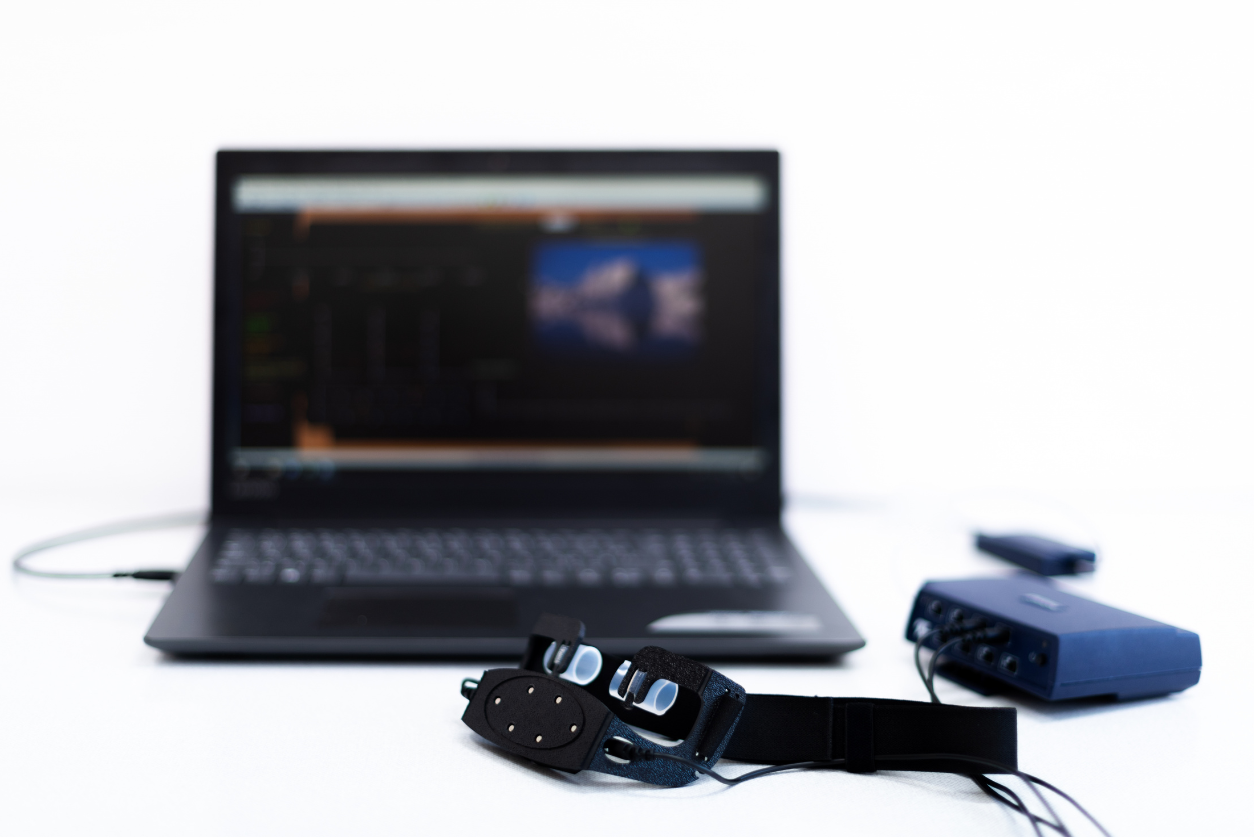
Neurofeedback gives you live feedback about a measured pattern of brain activity. A common type uses EEG, which records electrical signals through small sensors on your scalp. These signals are often called brainwaves.
A computer reads the signals and turns them into feedback. Depending on the system, that feedback may involve a sound, an image, or a game-like display. The feedback changes when the measured pattern moves toward the training target.
The aim is to help you learn through repeated feedback. The provider chooses what to measure and how to guide the training. Different programs use different targets and methods.
EEG sensors record signals. They do not read your thoughts or send electricity into your brain. Neurofeedback also does not teach you how to throw, shoot, sprint, or swing. You still learn those skills through sport practice.
Avoid thinking of brainwaves as simply good or bad. Researchers have not found one ideal pattern that guarantees better play for every athlete. Your sport, goals, and training method all matter.
What Can Neurofeedback Do for Athletes?
Research offers reasons to explore neurofeedback, but it also calls for care. Reviews of sports studies have found promising results on some tasks, such as putting, shooting, and balance. Results vary, and many studies involve small groups.
That means we should not turn a research finding into a promise. Better performance on one test does not prove that every athlete will play better in a real game.
A change in a brain signal also does not always lead to a change in sport skill. Researchers still need stronger evidence about which methods help which athletes and how long any gains last.
Use that knowledge to set fair goals. Neurofeedback may be worth discussing as one part of your plan. It should not come with a promise of a starting spot, a scholarship, or a certain jump in performance.
The key question is not just, “Did the training screen change?” It is, “Did anything useful change in my daily habits or sport practice?”
Choose One Mental Skill to Work On
“Get mentally tougher” sounds good, but it is hard to measure. A clear goal tells you what to practice and what progress might look like.
Start with one of the situations below. These are possible goals to discuss with a provider, not guaranteed benefits of neurofeedback.
Keep Your Focus on the Next Task
You cannot control the crowd, the weather, or every call. You can work on where you place your attention.
A focus goal might be to follow your pre-shot routine each time. Another might be to listen to a full drill cue before you start. Choose a behavior you can see rather than a vague feeling you hope to have.
Tell your provider when focus breaks down. Is it during long practices? After a mistake? When someone watches you? Details make the discussion more useful.
Respond to Pressure Without Rushing
The goal is not to remove every nervous feeling. Instead, choose a response you want to use when nerves show up.
For example, you might practice taking one slow breath before a serve. You might use a short cue, such as “see the target,” before a shot.
Mental performance coaching can help you build these routines. If you explore neurofeedback, ask how it relates to the same goal. Keep the link to sport clear.
Reset After a Mistake
You do not need to pretend a mistake never happened. You need a way to return to the next play.
Try building a brief reset with your coach. Notice the mistake, name one useful adjustment, and shift to your next job. Keep it short enough to use during play.
A reset goal might be to return to your ready position before the next pitch. That gives you something concrete to track. It is more useful than demanding that you never feel upset.
Pair Neurofeedback With Mental Performance Coaching
Neurofeedback and mental performance coaching are not the same service. Neurofeedback uses feedback from measured brain activity. Coaching helps you build skills that you can use in practice and competition.
At Launch Sports Performance, our coaching work includes focus, confidence, pressure, and negative self-talk. We also help athletes set goals and build practical plans.
Say you tend to rush after a missed shot. Coaching can help you build a reset routine. You can then practice that routine during drills and use it when the game gets tense.
If you also use neurofeedback, ask your provider how the training fits that goal. Do not assume that progress in a quiet room will carry over on its own.
You still need chances to use your mental skills while moving, making choices, and dealing with distractions. Research has not settled how well neurofeedback gains transfer to real competition.
Keep your training connected to the moments that matter in your sport.
Build an Off-Season Plan You Can Keep
You do not need to add every tool at once. Use the following steps to organize your off-season. This is a planning guide, not a neurofeedback treatment schedule. Your provider should guide any neurofeedback sessions.
Step 1: Review the Season Without Blaming Yourself
Pick two or three moments when your mental game broke down. Write what happened before, during, and after each one.
For example: “I missed a pass. I worried the coach would bench me. I stopped asking for the ball.”
That note gives you more useful detail than “I played badly.” It also helps you see a habit without turning one game into a judgment about who you are.
Look for a pattern. Perhaps you rush after errors, lose focus late in practice, or avoid hard tasks when you feel watched.
Step 2: Set a Small, Clear Goal
Choose a goal you can act on. “Use my reset before the next play” is clearer than “never get frustrated.”
Write down what success looks like. You might aim to use your reset in four out of five practice chances. That is an example, not a required target. Choose a starting point that fits you.
Share the goal with your mental performance coach. If you are considering neurofeedback, bring the same goal to that conversation.
Step 3: Make Room for Practice and Rest
Look at your full week before adding appointments. Include sport practice, travel, schoolwork, work, and downtime.
Ask about the expected time commitment and total cost. Find out how the provider reviews progress and when you would decide whether to keep going.
Do not assume more sessions always mean better results. Research uses many different schedules, so no single session count guarantees success.
Choose a plan you can follow without making recovery an afterthought.
Step 4: Practice the Skill in Your Sport
Start using your mental routine during normal drills. Once it feels familiar, ask your coach to help you test it under suitable pressure.
A basketball player could use a pre-shot routine during a scored drill. A baseball player could practice a reset after an error in a scrimmage. A runner could use a focus cue during a timed effort.
These examples test a mental routine. They do not prove that neurofeedback caused a change.
Use the results to learn. If the routine falls apart, make it simpler and try again. The off-season gives you space to adjust before the next season starts.
What to Ask Before Your First Neurofeedback Visit
A first conversation should help you understand the service and decide whether it fits your needs. You should feel free to ask basic questions.
Start by explaining what you want to change. Share your sport, your schedule, and the moments that trouble you. For a young athlete, a parent can help provide background while giving the athlete room to speak.
Ask what the provider measures and why. Ask how they choose training goals. Find out what a session involves, how long visits take, and what the full plan may cost.
You can also ask about the provider’s training, possible side effects, and how they respond if you feel unwell. Share relevant health concerns and any medicines you take. Do not change medicines on your own to take part in training.
A useful discussion should leave you with clear next steps, not a promise that the tool works for everyone. If your main concern involves an injury or a health condition, ask which type of care you need first.
Track Progress Beyond the Training Screen
Use a short log to see whether your plan helps. You do not need a long report after every practice.
Before you start, record how often the target problem shows up. Then track the same behavior over time. Keep the wording simple so you use the log in the same way each week.
For a reset goal, note whether you used the routine before the next play. For a focus goal, note whether you followed your chosen cue during the drill.
You can add a brief rating for focus or stress, but do not rely only on how you felt. Pair that rating with a behavior you can observe.
Review the notes with your coach or provider. Look for a pattern across several practices rather than judging the plan by one great day.
Also note major changes in your schedule. New coaching, extra skill practice, poor sleep, and school stress can affect how you perform. If several things change at once, you cannot know which one caused the result.
Honest tracking helps you decide whether to continue, adjust the goal, or try another approach.
How Parents Can Support Young Athletes
Parents often want to help, especially when a child loses confidence or dreads competition. Start by asking what the athlete wants to change.
Avoid presenting neurofeedback as a way to fix a child who is not trying hard enough. A mental struggle does not make an athlete lazy or weak. Frame the discussion around learning a skill and finding support.
Keep goals tied to actions rather than rankings. Ask, “Did you use your reset today?” instead of making every talk about points, wins, or college plans.
Be clear about the time and money involved. The athlete should understand the plan in words that make sense to them. Leave room for questions and honest feedback.
The sports reviews discussed here do not establish the same results for every age group. Do not assume findings from adult athletes apply to children. Ask the provider about age fit and realistic expectations.
If a concern affects daily life beyond sport, discuss it with an appropriate health professional. Performance training should not stand in for needed health care.
Common Questions About Off-Season Neurofeedback
Will Neurofeedback Replace Physical Practice?
No. It does not teach sport technique or build physical strength. Keep working with your sport coach on the skills and physical demands of your event.
Think of neurofeedback as a possible addition, not the whole plan. The same applies to mental performance coaching: you need to practice mental skills where you use your sport skills.
How Many Sessions Will I Need?
There is no single number that fits every athlete or goal. Studies use different methods and training schedules. They do not show that a fixed number of visits guarantees a result.
Ask your provider for a proposed plan, a review point, and the cost. You should know how you will decide whether the work is useful.
Does Neurofeedback Guarantee Better Focus or Better Play?
No. Sports research is promising in some areas, but results are uneven. Some athletes or tasks may benefit more than others, and real-game results remain uncertain.
Keep your goals realistic and track what changes. Be cautious about claims that one tool will remove all nerves or make you perform at your best every time.
Can I Use It for an Injury or a Health Concern?
Do not treat this article as a medical plan. Research on sports performance does not prove that neurofeedback treats a concussion, a sleep problem, or a mental health condition.
If you have symptoms or an injury, seek qualified care. Your health professional can help you decide what is appropriate and how it fits with other care.
Explore Your Off-Season Options in Tulsa
You do not have to carry the same mental habits into another season without looking at them. Start with one concern, choose a clear goal, and build a plan that fits your life.
At Launch Sports Performance, we work with athletes from middle school through professional levels. Sam Hale is a Certified Mental Performance Consultant. Kristen Hale is a Licensed Professional Counselor who is board certified in neurofeedback. Our services include mental performance coaching and neurofeedback.
We can discuss your goals and explain where each service may fit. The starting point is your need, not the idea that every athlete needs the same tool.
Whether you want to improve your practice focus or respond better after mistakes, use the off-season to take a thoughtful next step. Keep sport practice, mental skills, and rest in the same plan.
Contact Launch Sports Performance to ask about neurofeedback and mental performance coaching in Tulsa, Oklahoma. Bring your questions and your goals. Together, we can discuss a practical path for your mental game.