
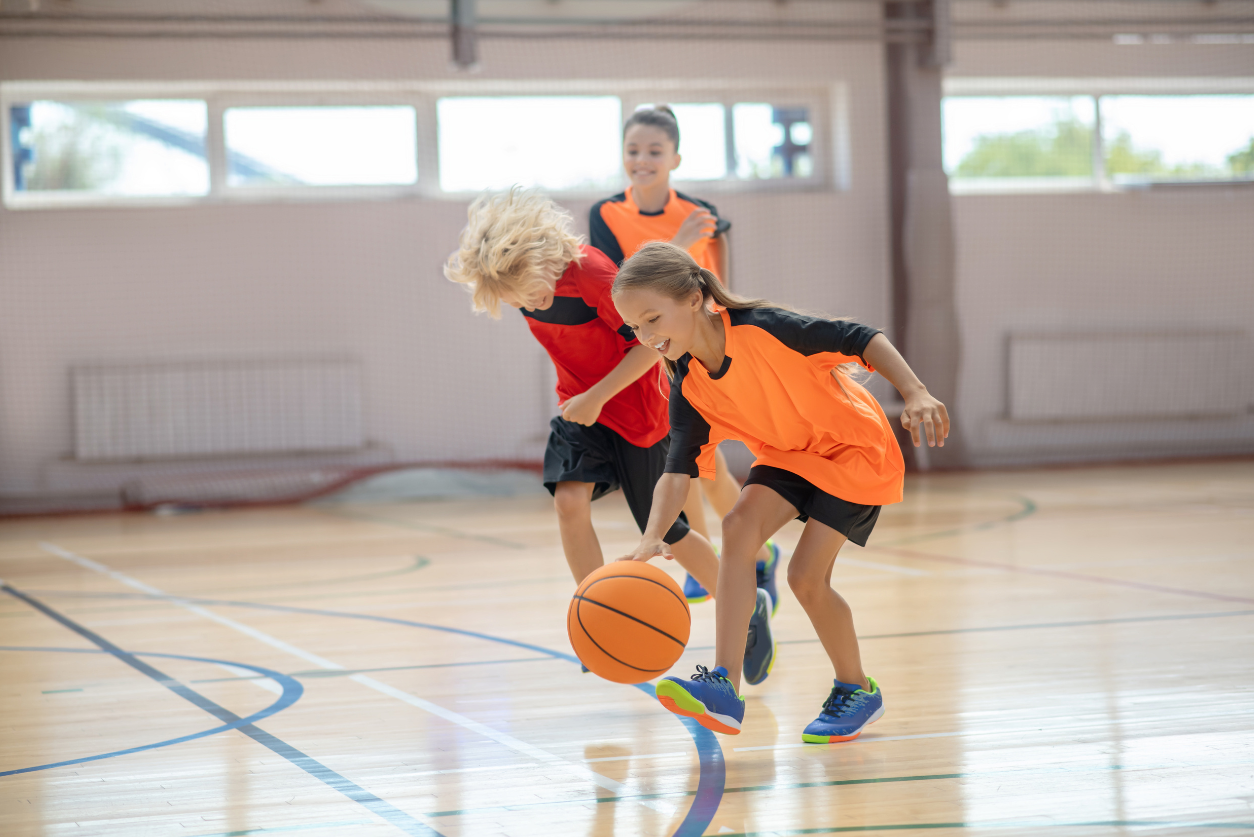
Have you ever played a perfect game in practice, only to freeze up when the real game starts? You are not alone. Many athletes face this exact problem. They train hard, master their skills, and feel great in practice. But on game day, everything changes. The pressure hits, and suddenly, those perfect skills disappear.
This is a common struggle for athletes of all ages and levels. It is not because you lack talent or physical ability. The real issue is mental. This is where sports psychology comes in. By understanding the mental side of sports, you can bridge the gap between practice and competition.
In this blog, we will explore why athletes struggle to bring their practice performance to game day. We will look at the psychological barriers, like distraction and overthinking, that get in the way. Most importantly, we will share powerful focus-enhancing strategies, such as visualization and mindfulness. These tools from sports psychology will help you perform your best when it matters most.
The Disconnect Between Practice and Game Day
Imagine you are at practice. You feel relaxed. You know your teammates, your coaches, and the drills. If you make a mistake, it is okay. You just try again. Practice is a safe space to learn and grow.
Now, imagine game day. The stands are full of people watching you. The score matters. The pressure is on. Suddenly, a mistake feels like a disaster. Your heart beats faster, and your mind starts racing.
This shift in environment is the main reason why athletes struggle to translate practice skills into game-day success. In practice, you focus on the process. You think about your form, your technique, and how to improve. On game day, you focus on the outcome. You worry about winning, losing, or what others might think.
This change in focus is a huge psychological barrier. It takes you out of the present moment and puts you in a state of fear and anxiety. To overcome this, we need to look at the specific mental blocks that hold athletes back.
Psychological Barrier 1: Overthinking
One of the biggest mental blocks athletes face is overthinking. When you practice a skill over and over, it becomes automatic. Your body knows what to do without you having to think about it. This is called muscle memory.
But on game day, the pressure can make you doubt yourself. You start to think too much about your technique. “Am I holding the bat right?” “Is my foot in the right position?” “What if I miss this shot?”
When you overthink, you interrupt your body’s natural flow. You take a skill that was automatic and make it clunky and awkward. This is often called “paralysis by analysis.” Your brain is working so hard to control every little movement that your body freezes up.
Overthinking is not the same as anxiety, but it is a warning sign. It happens when your brain tries to control too many things at once. It takes you out of your body and traps you in your head. To perform at your peak, you need a calm mind that can react to the game naturally.
Psychological Barrier 2: Distraction
Another major barrier is distraction. In practice, there are very few distractions. You can easily focus on the task at hand. But game day is full of noise.
There are fans cheering (or booing). There are officials making calls. There is the opposing team trying to beat you. There is the weather, the field conditions, and the scoreboard.
With all these distractions, it is hard to keep your focus where it belongs. Your attention gets pulled in a million different directions. When you are distracted, you cannot perform at your best. You might miss a play, react too slowly, or make a silly mistake.
Sports psychology teaches us that focus is a skill. Just like you train your muscles, you must train your attention. If you do not practice focusing, you will easily get distracted when the pressure is on.
Psychological Barrier 3: Fear of Failure
The fear of failure is a powerful emotion that can ruin a game-day performance. In practice, mistakes are accepted as part of learning. But in a game, failure feels unacceptable.
Athletes often worry about letting down their team, their coaches, or their parents. They worry about their stats dropping or losing their spot on the team. This intense fear of making a mistake makes them play timidly.
Instead of playing to win, they play not to lose. They hold back, avoid taking risks, and second-guess every decision. This cautious style of play rarely leads to success. It only reinforces the fear and makes the problem worse.
Psychological Barrier 4: Perfectionism
Perfectionism is another sneaky barrier that ruins game day. Many athletes think they need to be perfect to be successful. They want every pass, every shot, and every play to be flawless.
While it is good to have high standards, expecting perfection is a trap. Sports are messy. Mistakes happen. Even the best athletes in the world make errors.
When a perfectionist makes a mistake, they cannot let it go. They dwell on it, get angry at themselves, and lose their focus. This negative spiral ruins the rest of their game. Sports psychology helps athletes understand that excellence is a better goal than perfection. Excellence means doing your best and learning from your mistakes.
Bridging the Gap with Sports Psychology
So, how do we fix this? How do we take the relaxed, confident athlete from practice and bring them to game day? The answer lies in sports psychology.
Sports psychology provides athletes with the mental tools they need to overcome these barriers. It helps them build emotional control, sharpen their focus, and perform under pressure. Let’s look at some of the most effective strategies for enhancing focus and concentration.
Strategy 1: Visualization and Mental Rehearsal
Visualization is one of the most powerful tools in sports psychology. It is also known as mental imagery or mental rehearsal. It involves creating a vivid picture in your mind of you performing successfully.
Elite athletes use visualization all the time. They close their eyes and imagine every detail of the game. They see the field, hear the crowd, and feel the equipment in their hands. Most importantly, they feel the emotions of success and confidence.
Why does this work? Because your brain has a hard time telling the difference between a real event and an imagined one. When you visualize yourself succeeding, you are actually building neural pathways in your brain. You are training your mind and body to perform that action perfectly.
Here is how to practice visualization:
Find a quiet place: Sit or lie down in a comfortable position where you will not be disturbed.
Relax your body: Take a few deep breaths to calm your nervous system.
Use all your senses: Imagine the sights, sounds, smells, and feelings of the game. Make the image as real as possible.
Focus on success: See yourself executing your skills perfectly. Feel the confidence and joy of playing well.
Practice regularly: Spend 5 to 10 minutes a day visualizing your performance. The more you do it, the more effective it will be.
By visualizing success, you build confidence and reduce anxiety. When game day arrives, your brain feels like it has already been there and done that.
Strategy 2: Mindfulness and Staying Present
Mindfulness is the practice of paying attention to the present moment without judgment. In sports, this means focusing on the current play, not the mistake you made five minutes ago or the score at the end of the game.
When you are mindful, you cannot overthink or worry about the future. You are completely locked into what is happening right now. This is often called being “in the zone” or experiencing “flow.”
Mindfulness helps athletes manage distractions and quiet their racing minds. It allows them to react naturally to the game instead of getting caught up in their thoughts.
Here are a few ways to practice mindfulness in sports:
Focus on your breath. When you feel your mind wandering, bring your attention back to your breathing. Notice the feeling of the air entering and leaving your body. This simple act grounds you in the present moment.
Use a focal point. Pick a specific object to look at when you need to refocus. It could be the logo on your equipment, a spot on the wall, or a blade of grass. When you look at your focal point, take a deep breath and clear your mind.
Body scan. Pay attention to how your body feels. Notice any areas of tension and consciously relax them. This helps you stay connected to your physical movements.
Strategy 3: Setting Performance Objectives
Focusing on the outcome — winning or losing — can cause a lot of anxiety. To perform well, you need to focus on the process. One way to do this is by setting performance objectives.
Performance objectives are specific, controllable goals that you set for yourself during a game. They have nothing to do with the score or your stats. They are all about the actions you need to take to play your best.
For example, a basketball player might set the following performance objectives: keep knees bent on defense, follow through on every shot, and hustle back on defense after every play.
These objectives give your mind something productive to focus on. They keep you grounded in the present moment and stop you from worrying about things you cannot control. When you achieve your performance objectives, the outcome will often take care of itself.
Strategy 4: Developing a Pre-Game Routine
A pre-game routine is a set of actions you perform before every competition. It helps you transition from your normal day into game mode. A good routine prepares both your body and your mind for the challenge ahead.
Routines are comforting because they are familiar. They give you a sense of control in a stressful environment. When you go through your routine, you are telling your brain that it is time to focus and perform.
Your pre-game routine should include both physical and mental preparation:
Physical warmup: Get your blood flowing and stretch your muscles.
Mental rehearsal: Spend a few minutes visualizing your success.
Deep breathing: Take slow, deep breaths to calm your nerves.
Positive self-talk: Repeat your confidence-building statements.
Focus on objectives: Review your performance objectives for the game.
The key to a successful routine is consistency. Do the exact same things in the exact same order before every game. This consistency will help you feel grounded and ready to play your best.
Strategy 5: Simulating Game Pressure in Practice
One of the best ways to prepare for game day is to make practice feel more like a game. If you only practice in a relaxed, stress-free environment, you will be shocked when the pressure hits on game day.
Coaches and athletes can use sports psychology techniques to simulate game pressure during practice. This helps athletes get used to the feeling of stress and learn how to perform through it.
Keep score. Turn drills into competitions. Keep track of points and declare a winner and a loser. Add consequences. If a player makes a mistake or loses a drill, have them do extra sprints or push-ups. This adds a sense of urgency to the practice. Create noise and distraction. Play loud music or have teammates cheer and yell during drills. This forces athletes to practice their focus and concentration. Use two-minute drills. Set a time limit for a drill to create a sense of pressure and rush.
By practicing under pressure, athletes learn how to manage their emotions and stay focused when it counts.
Strategy 6: Managing Mistakes with a Reset Button
Mistakes are going to happen. The best athletes in the world make mistakes every single game. The difference between a good athlete and a great athlete is how they respond to those mistakes.
When you make a mistake, it is easy to get frustrated. You might drop your head, yell, or give up on the play. This negative reaction only makes things worse. It distracts you from the next play and ruins your confidence.
To manage mistakes, you need a “reset button.” A reset button is a physical action or a mental phrase that helps you let go of the mistake and move on.
For example, a baseball player might step out of the batter’s box, adjust their batting gloves, and take a deep breath. That is their physical reset button. A soccer player might say to themselves, “Next play,” after a bad pass. That is their mental reset button.
When you use your reset button, you are telling your brain to flush the mistake away. You are bringing your focus back to the present moment so you can perform your best on the next play.
Strategy 7: Building Emotional Control
Emotional control is a huge part of sports psychology. Games are full of highs and lows. You might score a great goal one minute and make a terrible mistake the next. If you let your emotions ride this roller coaster, you will lose your focus.
Athletes need to learn how to stay emotionally steady. This does not mean you cannot be excited or disappointed. It just means you cannot let those feelings control your actions.
When you feel yourself getting too angry or too excited, take a step back. Use your deep breathing techniques to calm your heart rate. Remind yourself of your performance objectives. By staying in control of your emotions, you stay in control of your game.
How Parents and Coaches Can Help
Parents and coaches play a huge role in an athlete’s mental game. The way adults react to mistakes and handle pressure can either help or hurt the athlete.
If a coach yells at every mistake, the athletes will become afraid of failing. They will start overthinking and playing timidly. If a parent constantly talks about the score and winning, the athlete will feel too much pressure.
Adults can use sports psychology principles to support their athletes. Praise effort, not just results. Focus on how hard the athlete tried, not just whether they won or lost. This encourages a growth mindset. Create a safe space to fail. Let athletes know that mistakes are a normal part of learning. Do not punish them for trying new things and messing up.
Model good emotional control. If adults stay calm under pressure, the athletes will learn to do the same. Encourage mental training. Support the athlete in practicing visualization, mindfulness, and positive self-talk.
When parents and coaches create a positive, supportive environment, athletes feel more confident and perform better on game day.
The Long-Term Benefits of Mental Training
The benefits of sports psychology go far beyond game day. The mental skills you learn in sports can help you in every area of your life.
For example, the focus and concentration you build through mindfulness can help you do better in school. The confidence you gain from visualization can help you ace a job interview. The emotional control you learn on the field can help you handle stress in your personal life.
By investing in mental training, you are not just becoming a better athlete. You are becoming a stronger, more resilient person. These are skills that will serve you well long after your playing days are over.
Conclusion
At Launch Sports Performance, we know that physical training is only half the battle. To truly succeed in sports, you must also train your mind. Sports psychology offers the tools and strategies you need to unlock your full potential.
Do not let overthinking and distraction ruin your game day. Take control of your focus, build your mental toughness, and watch as your practice skills finally translate into game-day success. With the right mental approach, you can perform at your peak and enjoy the game you love.
Start training your mind today, and get ready to launch your performance to the next level!