
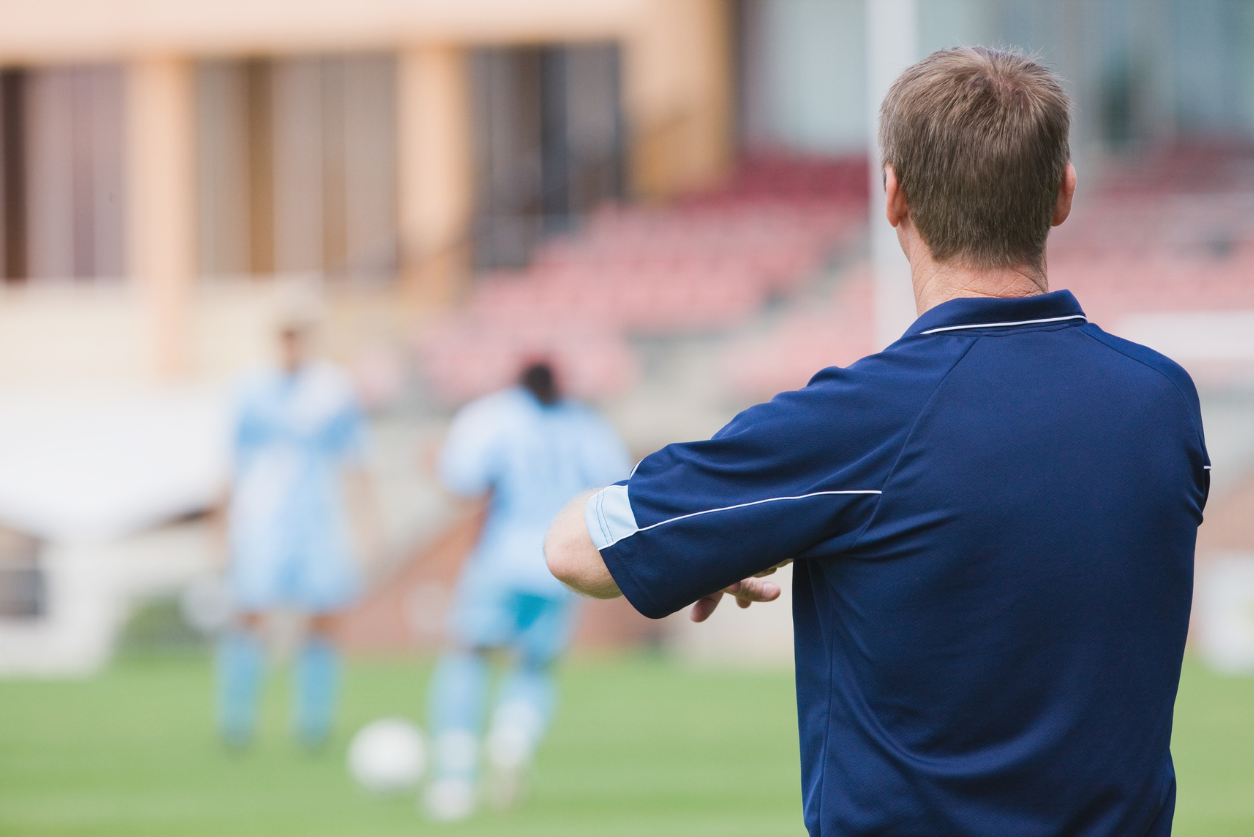
An athlete misses an easy shot, makes one error, or feels nervous before a big game. What happens next can change the rest of the day. Too often, the answer is, “Shake it off,” “Be tougher,” or “Try harder.” Those words may come from a good place. Coaches and parents want athletes to be strong. Athletes want to prove they can handle pressure.
But pressure does not disappear because we ignore it. A mental block is not always a sign that an athlete lacks effort. Sometimes it is a sign that the athlete needs a skill, a plan, or support. That is where mental game coaching can help.
Mental game coaching gives athletes ways to handle nerves, mistakes, fear, and doubt. It teaches them what to do when the game feels fast and their thoughts get loud. It does not make an athlete soft. It helps them become more ready, more aware, and more able to respond.
The old message says, “Just tough it out.” The better message says, “Let’s train for this.”
“Toughing It Out” Is Not a Mental Game Plan
Being tough matters in sports. Athletes need effort. They need to finish hard workouts, learn from losses, and stay committed when progress is slow. Real growth is not always easy.
Still, effort alone cannot solve every problem. An athlete may work very hard and still freeze at the start line. A goalkeeper may train all week and still replay one bad goal in their mind. A hitter may know how to swing but feel tense every time the count is full. Telling that athlete to “try harder” can make the problem worse. Now they feel pressure from the game and pressure to hide what they feel.
That does not mean athletes should quit when things get hard. It means they need better tools for hard moments. A player would not fix poor footwork by wishing harder. They would break the skill into small parts and practice it. The same idea applies to focus, confidence, and recovery after mistakes.
A better definition of toughness: Toughness is the ability to notice a hard moment, use a skill, ask for help when needed, and keep taking the next useful action.
This change matters because sport can be demanding. Practices, travel, school, family duties, injuries, team roles, and hopes for the future can all add pressure. Coaches have a major role in setting the tone. Best-practice guidance encourages coaches to expect that athletes will feel stress at times, create space for them to speak up, show empathy, and connect them with proper support when needed.
In other words, a strong program does not ask athletes to suffer in silence. It teaches them how to face pressure with a plan.
Mental Skills Are Skills, Not Personality Traits
Some people think athletes are either born “mentally tough” or not. That idea leaves many athletes stuck. If confidence is only something you are born with, what can you do on a bad day?
The good news is that mental skills can be practiced. The U.S. Olympic & Paralympic Committee explains that mental skills are not only natural traits. Athletes can learn them, practice them with feedback, and adjust them to fit their sport and needs.
Think of it like strength training. An athlete does not walk into the weight room and expect one workout to make them strong. They repeat good movements over time. They get coaching. They track progress. They adjust the plan when something does not work.
Mental training works in a similar way. An athlete can practice a reset after an error. They can learn to slow their breathing before a free throw. They can use one short cue word, such as “next,” “drive,” or “smooth,” to bring their attention back to the job in front of them. They can picture a hard game moment before it happens and choose how they want to respond.
For young athletes, the coaching needs to fit their age and stage of growth. Research on youth sport mental training notes that athletes develop in different ways. Younger athletes often learn best with simple words, short sessions, and hands-on activities. Older athletes can take a bigger role in choosing goals and discussing what works for them.
This is why one-size-fits-all advice often fails. “Calm down” may not help an athlete who has never learned a calming skill. “Be confident” may not help an athlete who does not know how to build confidence after a rough game. Good coaching turns big ideas into small actions.
What Mental Game Coaching Actually Teaches
Mental game coaching is structured practice for the thoughts, feelings, and habits that show up in sport. It is not just a pep talk. It gives athletes repeatable tools they can use before, during, and after competition.
The exact plan should fit the athlete, sport, and situation. A distance runner may need help staying steady through a long race. A baseball player may need a quick reset between pitches. A basketball player may need a plan for returning to the floor after missing two shots. Even so, many strong mental game plans use the same basic tools.
| Skill | What it helps an athlete do | Simple example |
| Process goals | Focus on controllable actions instead of only results. | “Win each first step” instead of “I have to score.” |
| Breathing and body reset | Lower tension and create a pause before action. | Take one slow breath, drop the shoulders, and set the feet. |
| Attention cues | Bring focus back to the present job. | Say “see the ball” or “next play.” |
| Helpful self-talk | Replace harsh, unhelpful thoughts with useful instruction. | Change “Don’t mess up” to “Stay low and drive.” |
| Imagery | Rehearse a skill, a situation, or a response before it happens. | Picture stepping to the line, breathing, and shooting with good form. |
| Post-game review | Learn from the day without turning one result into a label. | Name one win, one lesson, and one next step. |
These are not random tricks. Mental performance resources from Team USA include attention control, confidence, emotion regulation, breathing and relaxation, goal setting, imagery, self-talk, and routines among the skills athletes can develop.
The key word is practice. An athlete should not wait until the championship game to try a breathing routine for the first time. They should use it in normal practice. A player should not wait until they are in a slump to learn a reset phrase. They should test it after small errors all season long.
When skills become familiar, they are easier to use under pressure. That is the point. The goal is not to feel perfect. The goal is to have a useful response when things feel hard.
Toughness vs. Tools: The Difference Athletes Can Feel
The old and new approaches may sound similar at first. Both ask athletes to keep going. The big difference is how they get there.
| When pressure hits | “Tough it out” message | Mental game coaching message |
| An athlete feels nervous | “Stop thinking about it.” | “Name the feeling, take a reset breath, and focus on the next job.” |
| An athlete makes an error | “Get over it.” | “Use your reset routine, then move to the next play.” |
| An athlete lacks confidence | “You need to believe in yourself.” | “Build proof through preparation, small goals, and a review of past wins.” |
| An athlete is afraid to fail | “Do not be weak.” | “Fear is a signal. Let’s practice a brave, clear response.” |
| An athlete shares a concern | “Do not make excuses.” | “Thank you for saying something. Let’s figure out what support fits.” |
The second approach still has standards. It still asks athletes to prepare, compete, and take responsibility. It simply replaces shame with instruction.
That change can be powerful. Shame makes athletes want to hide. Instruction gives them something to do. When an athlete knows their next step, the moment can feel more manageable.
Coaches: Change the Message Without Lowering the Standard
Coaches do not need to become therapists to improve the mental side of sport. They can begin by changing the language they use every day. Small shifts can make it safer for athletes to learn and speak honestly.
Instead of saying, “You are in your head,” try asking, “What is your focus cue for the next rep?” Instead of saying, “Do not get nervous,” try, “Nerves mean this matters. Let’s use your routine.” Instead of saying, “You have to be tougher,” try, “What will help you respond after the next mistake?”
These questions move the athlete from panic to action. They give the athlete a job that is clear and within reach.
Coaches can also build mental practice into regular training. Give athletes a reset rule after an error. For example, they may take one breath, use one cue word, and get back into position. Ask them to set one process goal before a drill. End practice with a short review: What went well? What got hard? What will you use tomorrow?
Keep the work simple. A five-minute mental skill routine done often is more useful than one long speech given once a month. Youth-sport guidance also recommends that mental training match athletes’ development, including clear and simple language for younger players.
Most important, coaches should know the edge of their role. A coach can listen, care, and guide an athlete toward help. A coach should not try to handle serious mental-health concerns alone. Research-based guidance for coaches calls for referrals to appropriate experts and says athletes should not be pushed through significant mental pain any more than they would be pushed through a serious physical injury.
That is not weakness. That is responsible leadership.
Parents: Support the Athlete, Not the Scoreboard
Parents often want to help, especially when they see their child struggle. But car rides home, text messages after games, and talks before tryouts can add pressure without anyone meaning to.
A helpful parent starts by listening. Before giving advice, ask one simple question: “Do you want me to listen, help you think through it, or give you space?” That question gives the athlete some control and shows that their feelings are welcome.
Parents can also praise process, not only results. Notice effort, preparation, communication, and recovery after a mistake. Say, “I liked how you kept talking to your teammates after that error,” or, “You stayed with your routine even when the game got tense.” These comments teach athletes what success looks like beyond the final score.
Try not to turn every bad game into a long lesson. Athletes often need time to cool down first. A short, calm comment can be enough: “I love watching you play. We can talk later if you want.”
If the athlete keeps struggling, seems overwhelmed, or says they do not feel like themselves, take it seriously. A mental performance coach may help with sport skills such as focus, confidence, and routines. A licensed counselor or other qualified mental-health professional can help when concerns reach beyond performance or cause ongoing distress. Both kinds of support can be valuable, and they can work together when the right professionals are involved.
Where Counseling and Neurofeedback Fit
A clear plan separates performance coaching from clinical care. Mental game coaching focuses on trainable sport habits. It may teach an athlete how to focus, reset after mistakes, set process goals, or build a pre-game routine.
Counseling or therapy is different. Licensed mental-health professionals support people with mental-health concerns and life stress that may affect sport, school, work, relationships, or safety. Athletes should be referred to qualified care when concerns are severe, last a long time, affect daily life, or involve safety. Coaches and parents do not need to diagnose the problem. They do need to take the athlete seriously and connect them with appropriate help.
Neurofeedback is another tool some programs may use. In simple terms, it uses real-time information, often from brain activity, to help a person practice self-regulation. A coach or clinician may use it as part of a larger plan, not as a shortcut or a promise of better results.
The research on neurofeedback in sport is promising, but it is still developing. A 2023 systematic review found possible benefits in some studies, while also stating that strong evidence for its effect on sports performance is still missing. That is why athletes and families should ask clear questions. Who provides the service? What is the goal? What does the research support? How will it fit with normal coaching, recovery, and qualified mental-health care?
The best answer is rarely one magic tool. A strong plan usually includes regular mental skills practice, healthy communication, good physical recovery, and the right professional support when needed.
A Simple Mental Game Plan for Older Athletes
Older athletes can begin building a stronger response to pressure this week. Start small. Choose one routine and use it often.
First, name one moment that usually throws you off. It may be the first serve, the start of a race, a missed shot, a hard conversation with a coach, or the final minutes of a close game.
Next, make a short reset routine. Keep it under 10 seconds. For example: “Breathe. Drop my shoulders. Say ‘next.’ See the target.” A routine should be simple enough to remember when the game is loud.
Then, choose one process goal for practice. Do not make it about points, rankings, or praise. Make it about an action you control. A volleyball player may choose, “Call every ball early.” A soccer player may choose, “Check my shoulder before I receive the pass.” A swimmer may choose, “Keep a calm first 25.”
After practice, do a quick review. Write down one thing you did well, one hard moment, and one response you want to repeat or change next time. Keep the review honest but kind. The goal is to learn, not to attack yourself.
Finally, tell a trusted coach, parent, or teammate what you are practicing. Support works better when people know the plan. They can remind you of your cue word and notice progress that you may miss.
This is how athletes build confidence. Confidence does not mean you never feel nervous. It means you have proof that you can take the next useful step even when you do.
Build a Stronger Response to Pressure
The sports world does not need less toughness. It needs a better definition of it.
Toughness is not pretending you feel nothing. It is not hiding a problem until it grows. It is not treating every mental block like a character flaw. Real toughness is showing up, learning skills, using support, and responding with purpose.
Mental game coaching helps athletes do exactly that. It turns pressure from something to fear into something to practice. It gives coaches a better way to lead, parents a better way to support, and older athletes a better way to take charge of their game.
At Launch Sports Performance, the goal is not to tell athletes to simply push through. The goal is to help them build practical habits for focus, confidence, and recovery—so they can compete with a clearer mind and a stronger response when the moment gets hard.
Ready to strengthen the mental side of performance? Connect with Launch Sports Performance to explore a mental game plan that fits the athlete, the sport, and the season.