
A baseball hitter steps into the box after a bad at-bat. A softball pitcher feels the crowd get louder with runners on base. A golfer stands over a short putt and starts thinking about the last hole instead of this one.
These athletes do not always need more effort. Many already work hard. The problem is that their attention slips at the wrong time.
That is a common pain point in baseball, softball, and golf. An athlete may look sharp in practice, then lose focus when the game gets fast or the pressure rises. They may rush, overthink, or get stuck on a mistake. They may know what to do but have trouble staying with the task in front of them.
Neurofeedback may give athletes another way to practice attention control. It does not replace great coaching, skill work, sleep, nutrition, strength training, or recovery. It is also not a magic fix. Instead, neurofeedback can be a structured way to notice mental state, practice a reset, and build better focus habits over time.
This article explains how attention control works in sport, what neurofeedback is, and why it may fit baseball, softball, and golf athletes who want a steadier mind under pressure.
Attention Control: The Skill Behind the Skill
Attention control means putting your mind on the right thing, at the right time, for long enough to act well. It also means letting go of things that do not help.
For an athlete, the right thing is usually simple. A hitter may need to see the ball early. A pitcher may need to feel one clear cue before a pitch. A golfer may need to commit to a target and make a smooth stroke. Yet simple is not always easy.
Athletes face many distractions. Some are outside the body: crowd noise, an umpire’s call, a slow round, a coach’s voice, or a tough opponent. Others are inside the mind: fear of failing, a past error, a future score, or a long list of swing thoughts.
A strong athlete does not have to feel calm every second. They do need a way to return to the task after their mind wanders. That return is a trainable skill.
Attention control is not never getting distracted. It is noticing the distraction and coming back to the next useful action.
This matters because baseball, softball, and golf give athletes many chances to drift. There is time between pitches. There may be a long wait before a ball comes your way. A golfer has time to think while walking to the next shot. The goal is not to fill every quiet second with more thoughts. The goal is to use that time well.
What Is Neurofeedback?
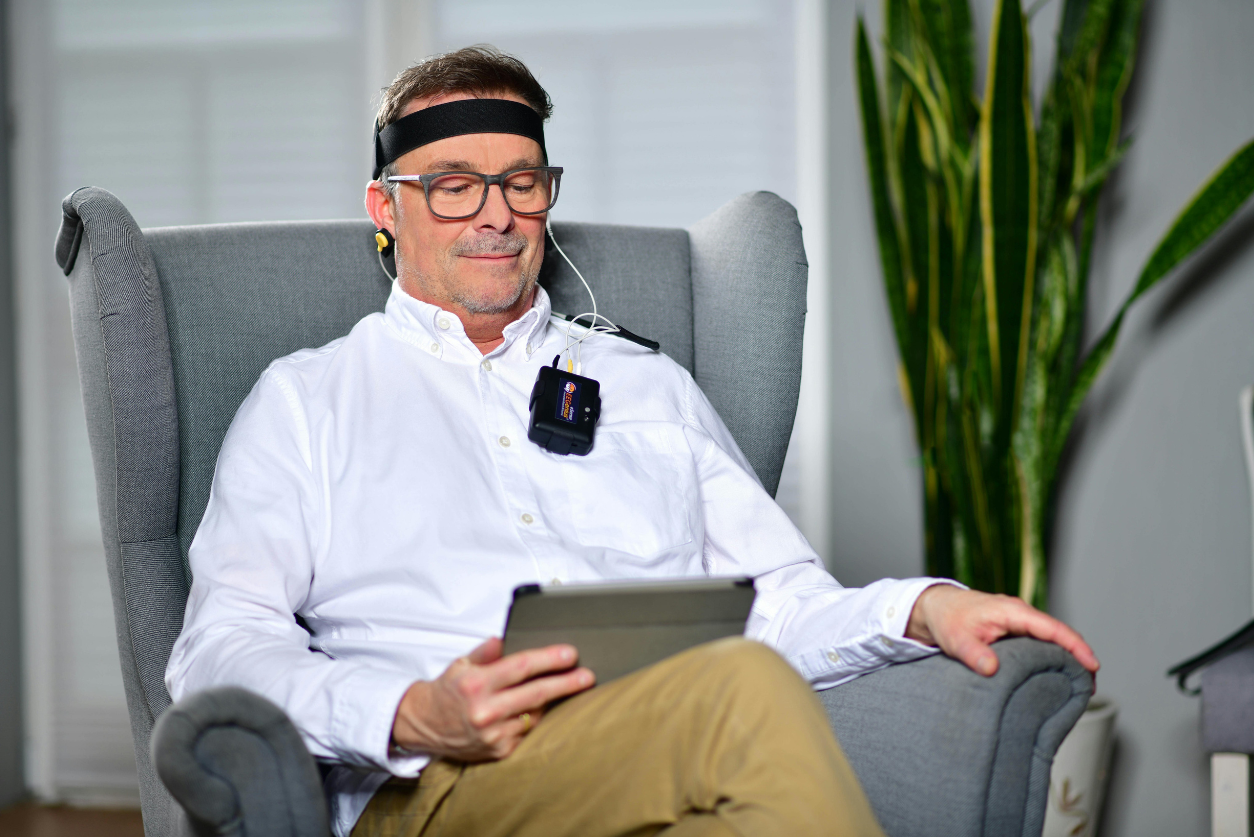
Neurofeedback is a type of training that uses information from the brain to give a person feedback in real time. In many programs, sensors placed on the scalp pick up brain activity. A computer turns that activity into simple feedback, such as changes in a game, video, sound, or visual display. The athlete then practices staying in a useful mental state while receiving that feedback.
Think of it like a mirror for attention. A mirror does not build a stronger swing for you. It helps you see what is happening so you can make a change. Neurofeedback aims to give athletes a similar kind of feedback about their focus and self-regulation.
A typical session does not look like a batting cage, bullpen, or driving range. The athlete may sit comfortably while watching a screen or listening to audio. The task may feel simple. But the bigger work is learning to notice when the mind is settled, when it is scattered, and how to return to a chosen focus cue.
Researchers have studied neurofeedback in sport because attention, reaction, emotion management, and self-regulation all affect performance. Reviews of the research describe promising results in some areas, including sustained attention and emotion management. At the same time, the studies differ in their methods, athlete groups, and measures. That means results can vary from person to person and sport to sport.
For that reason, a good sports performance plan treats neurofeedback as one tool, not the whole plan.
Why Focus Matters in Baseball and Softball
Baseball and softball move from quiet to fast in a moment. An athlete may wait, watch, and think. Then the ball is released and the body must respond. That change asks for clear attention.
A hitter cannot control the pitch. They can control their plan: get set, see the release point, track the ball, and make a good decision. When a hitter keeps replaying a strikeout, worries about scouts, or predicts the next pitch too early, useful attention leaves the task.
A pitcher or softball pitcher faces a different version of the same problem. One missed spot can lead to a rush of thoughts. “Do not walk this hitter.” “The bases are loaded.” “Everyone is watching.” Those thoughts are normal. But they do not tell the athlete where to place the next pitch.
Fielders also need attention control. A third baseman may stand ready for several pitches without getting a ball. Then the ball arrives in less than a second. Good readiness is active, not tense. The player needs to stay connected to the game without burning all their energy on worry.
Neurofeedback may help athletes practice the mental part of this rhythm: settle, notice, reset, and re-engage. It may give them a clearer sense of when their mind drifts and when it returns. The purpose is not to create a robot-like athlete. The purpose is to help the athlete use a repeatable focus routine when the moment matters.
Baseball and Softball Focus Examples
| Game moment | Attention trap | Better focus target | Simple reset cue |
| At-bat after a strikeout | Replaying the last swing | See the next pitch early | “New pitch.” |
| Pitching with runners on | Trying to control the score | One breath, one target | “Down and away.” |
| Waiting in the field | Daydreaming or getting tight | Ready feet and first step | “Ready now.” |
| After an error | Shame or anger | Next ball, next play | “Flush it.” |
These cues are short on purpose. A cue should help an athlete act. It should not start a long talk in the athlete’s head.
Why Focus Matters in Golf
Golf asks for a different kind of attention. It gives athletes more time, more choices, and more room for doubt. A golfer may have several minutes to think before a shot. That can help with planning. It can also lead to too many swing thoughts.
The best golf attention is often narrow at the moment of action. The athlete chooses a target, sees the shot, uses a trusted feel, and swings with commitment. After the shot, the athlete can review. During the shot, they need to play.
This makes golf a useful place to practice attention control. A player can learn to separate three parts of the game:
- Plan: Choose a club, target, and simple shot idea.
2. Play: Use a short routine and commit to the shot.
3. Review: Learn from the result after the ball is gone.
Trouble starts when the review shows up during the play step. A golfer may stand over a putt and think, “I missed this same putt last week.” Or they may add a new swing fix just before they move. The body gets tight. The routine gets longer. The athlete loses trust.
Neurofeedback may support a golfer’s work on steady attention and emotional reset. It may help make the athlete more aware of when they are locked onto a fear thought or trying too hard. Then the golfer can return to a simple routine: breathe, see the target, feel the stroke, and go.
A 2024 review focused on precision sports reported that neurofeedback may support attention and emotion management, but it also noted that research in this area is still fragmented. That is an important point. A golfer should not expect a device to lower a score by itself. Better results still come from a full plan that includes practice, course skills, physical readiness, and a strong pre-shot routine.
The Attention Loop: Notice, Reset, Choose, Execute
The most helpful part of neurofeedback may be what it teaches athletes to do away from the screen. The goal is to take a simple attention loop into practice and competition.
1. Notice
The athlete catches the moment their mind leaves the task. Maybe their shoulders rise. Maybe they start rushing. Maybe they hear a negative thought. Maybe their eyes stop tracking the ball or target.
Noticing is a win. An athlete cannot reset a problem they do not see.
2. Reset
The athlete uses a short action to settle. It may be one slow breath, a look at a target, a step out of the box, a glove tap, or a quick walk behind the ball. The reset should be easy enough to use in a real game.
3. Choose
The athlete picks one useful focus point. For a hitter, it might be “see it early.” For a pitcher, it might be “hit the glove.” For a golfer, it might be “roll it to that spot.”
4. Execute
The athlete commits and acts. They do not wait for perfect confidence. They use the routine and trust the work.
This loop is important because pressure will still show up. A good plan is not built around avoiding pressure. It is built around responding well when pressure appears.
Neurofeedback Works Best With a Full Performance Plan
No single tool can carry an athlete through a season. A good athlete needs skills, strength, movement quality, rest, food, recovery, coaching, and support. They also need enough time to learn.
Neurofeedback can fit into that larger picture. It may be useful when an athlete has a clear attention pain point, such as losing focus after mistakes, getting stuck in overthinking, or struggling to reset between plays. The work should connect to the athlete’s sport, goals, and daily routines.
For example, a player might use a neurofeedback session to practice settling and refocusing. Then, at the next baseball or softball practice, they use the same one-breath reset before each rep. A golfer might work on calm focus in a session, then use a matching pre-shot routine on the range and course.
The transfer piece matters. If a skill stays only in a training room, it may not help much on game day. Athletes should practice the same reset cue in drills, scrimmages, tournaments, and tough moments.
| Part of the plan | Main job | Example for an athlete |
| Sport coaching | Builds game skill and decisions | Hitting, pitching, short game, course plan |
| Physical training | Builds strength, speed, and durability | Lower-body strength, mobility, throwing care |
| Recovery | Helps the brain and body recharge | Sleep routine, rest day, hydration |
| Mental routine | Gives the athlete a repeatable reset | Breath, cue word, target focus |
| Neurofeedback | May support practice of self-regulation | Real-time feedback during attention training |
At Launch Sports Performance, the best question is not, “Can this one tool fix everything?” A better question is, “What skill does this athlete need to train, and how will we use it in their sport?”
What the Research Says—and What It Does Not Say
It is smart to be hopeful and careful at the same time.
Recent reviews of biofeedback and neurofeedback in athletes report positive findings in some studies for cognitive and performance-related outcomes. They also note a key limit: the research is still mixed. Studies often use small groups, different sports, different training plans, and different ways to measure success. Some studies do not find a clear attention benefit.
That does not mean neurofeedback has no value. It means athletes, parents, and coaches should avoid big promises. Research does not support saying that neurofeedback will guarantee a better batting average, more strikeouts, a lower golf score, or a college offer.
Instead, a fair message is this: neurofeedback may help some athletes practice attention control and self-regulation. It may be most useful when it is part of a larger training plan and when the athlete uses what they learn in real sport settings. More high-quality research is still needed, especially across different sports and athlete groups.
The research also reminds us that athletes are people, not machines. A hard week at school, poor sleep, injury stress, travel, family stress, or a rough stretch of games can affect focus. Training should respect the whole athlete.
How Parents and Coaches Can Support Better Focus
Adults can help athletes build attention control without adding more pressure. The goal is not to demand that a young player “focus harder.” The goal is to help them learn a simple plan for the next moment.
Start with language. After a mistake, avoid a long lecture. Ask one short question: “What is your next job?” For a hitter, that may be tracking the next pitch. For a pitcher, it may be making one quality pitch. For a golfer, it may be choosing a target on the next shot.
Praise the reset, not only the result. An athlete can make a great decision and still hit the ball hard at someone. A golfer can use a strong routine and still miss a putt. When adults notice the process, athletes learn that they can control their response even when they cannot control the outcome.
You can also help athletes make a focus routine before practice. Keep it short. One breath. One cue. One target. Then let the athlete play.
Here are three examples:
• Baseball hitter: Take one breath, look at the release area, and say, “See it early.”
• Softball pitcher: Take one breath, look at the glove, and say, “One spot.”
• Golfer: Stand behind the ball, choose the target, take one look, and say, “Commit.”
A routine does not need to be fancy. It needs to be practiced enough that the athlete can use it when nerves are high.
Is Neurofeedback a Good Fit for Your Athlete?
Neurofeedback may be worth exploring when attention is a repeat problem, not just one bad game. An athlete may benefit from a conversation if they often rush after mistakes, get caught in negative thoughts, struggle to settle before key moments, or have trouble carrying practice focus into competition.
Before adding any tool, ask clear questions. What exact focus skill does the athlete want to improve? How will the athlete practice that skill in their sport? How will progress be noticed? What other parts of the training plan need support?
It is also wise to work with qualified professionals and to share relevant health concerns with an appropriate healthcare professional. Neurofeedback is not a substitute for medical or mental health care. If an athlete has ongoing distress, major anxiety, sleep problems, attention concerns, or other health symptoms, their family should seek guidance from a licensed healthcare professional.
A strong program should welcome questions. It should explain the process in plain language. It should avoid promises. And it should connect attention training to the athlete’s real goals in baseball, softball, golf, and life.
Build a More Reliable Game-Day Focus
Baseball, softball, and golf ask athletes to stay present in moments that matter. The game may be loud, slow, fast, stressful, or uncertain. None of that changes the next useful job.
Neurofeedback may give athletes a way to practice noticing their attention, settling their mind, and returning to a simple task cue. When paired with sport coaching and a clear routine, it can be a thoughtful part of a bigger performance plan.
At Launch Sports Performance, we believe focus is not something athletes either have or do not have. It is a skill they can practice. The goal is not perfect thoughts. The goal is a better response: notice the drift, reset, choose the next job, and compete with purpose.
If your athlete often looks great in practice but loses focus under pressure, start with a conversation about the specific moment that breaks down. From there, you can build a plan that supports stronger attention—one pitch, one swing, one shot, and one play at a time.